Research-based product playbook · Published June 2, 2026 · How we research
10 min read · Fact-checked November 4, 2026 · Research-based analysis
THE EDITORIAL VIEW
A landing page should make one useful promise and deliver a recognizable next step. The page, form, confirmation and receiving team form one service experience. A visually persuasive page can still fail when the visitor cannot submit the form on a phone or the enquiry arrives without enough context to continue.
Best fit: A specialist service firm building a campaign page for a diagnostic consultation.
Poor fit: An unverified configuration or an undefined completion event for this specific task.
Table of Contents
A landing page should make one useful promise and deliver a recognizable next step. The page, form, confirmation and receiving team form one service experience. A visually persuasive page can still fail when the visitor cannot submit the form on a phone or the enquiry arrives without enough context to continue.
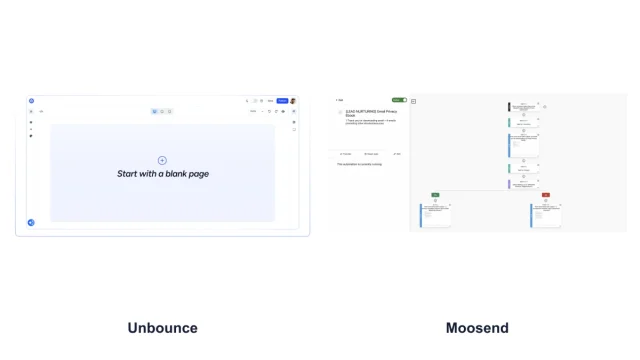
This Unbounce playbook follows a fictional specialist service firm offering a diagnostic consultation. The offer has a defined audience and a few legitimate exclusions. The team wants a page that helps a suitable visitor understand the scope and creates a valid enquiry with an accepted owner. It does not want a larger form-submission total that hides irrelevant or undelivered requests.
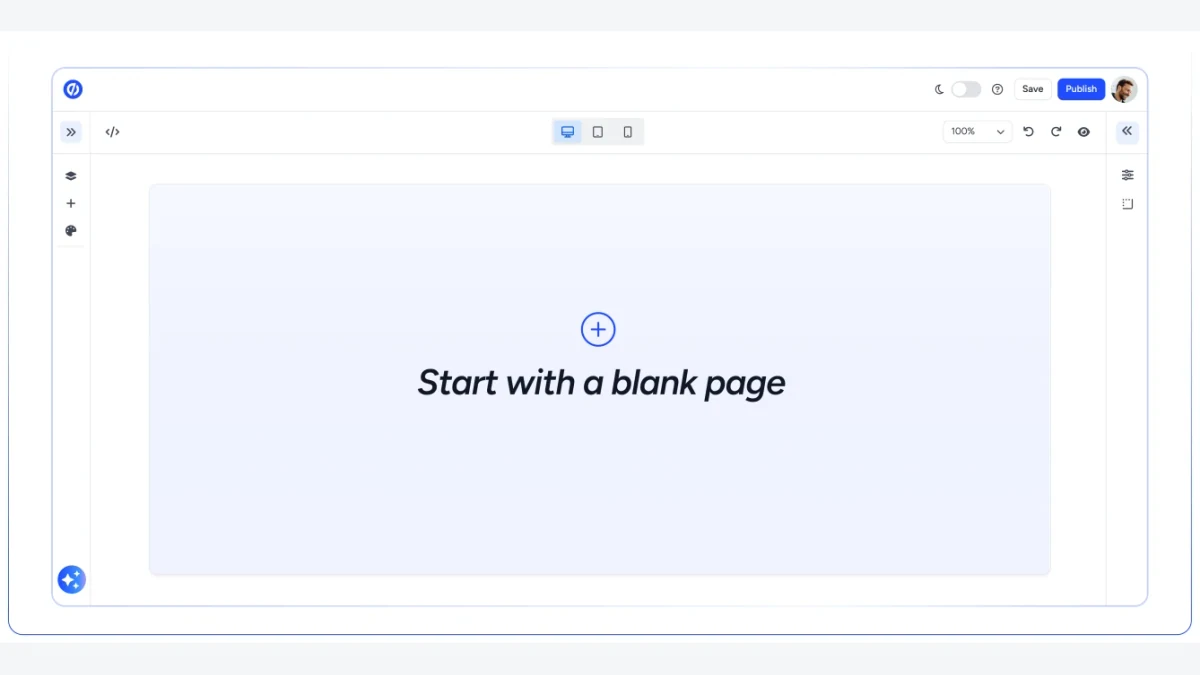
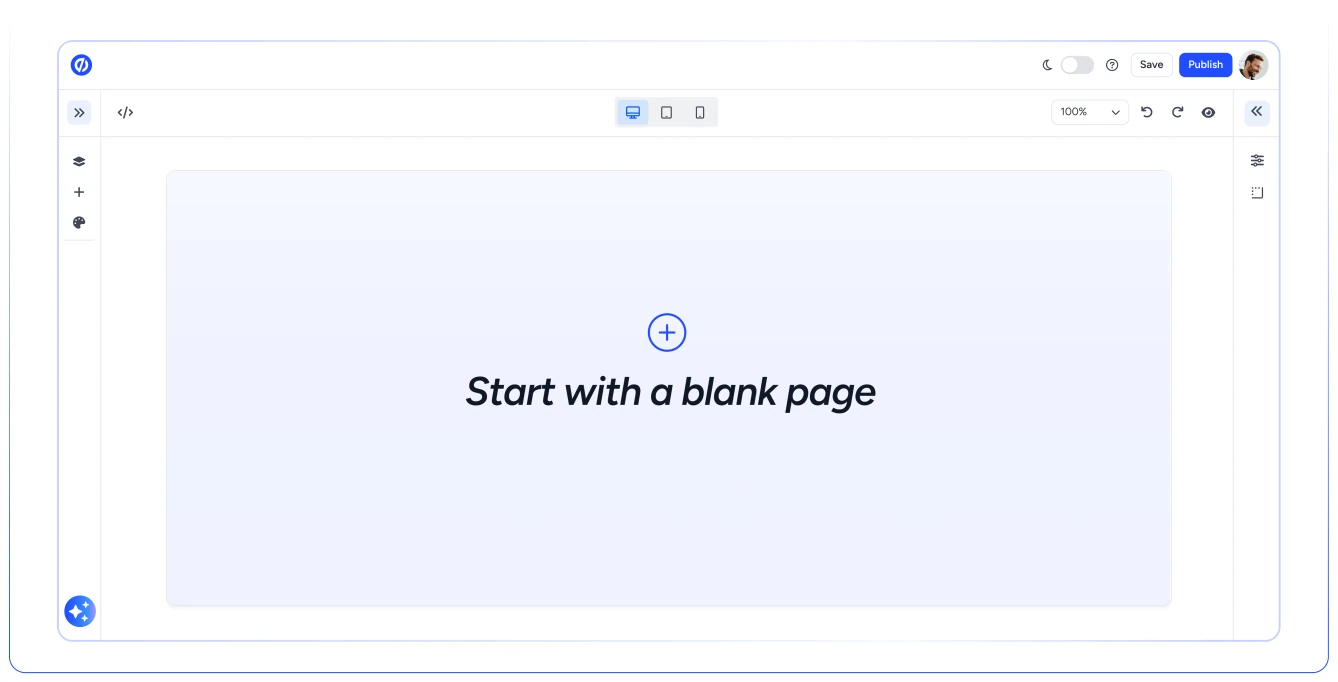
Unbounce provides landing-page creation and related campaign functions, with experimentation capabilities depending on plan. This article focuses on the page-to-enquiry route. It is a proposed brief and acceptance workbook, not evidence of an observed conversion lift or a claim that a particular design guarantees qualified demand.
Design the work around the actual completion event
1. Write the offer and its limits
Define the visitor, problem, consultation scope and what happens after the request. Put a material exclusion near the relevant promise rather than hiding it in an unrelated footer.
A broad headline can attract enquiries the service team cannot fulfill or price sensibly.
2. Match the traffic message to the page
Use the approved campaign promise and terms consistently across the entry message, page and form. Preserve the campaign reference needed by the receiving team.
A visitor can reach a well-designed page that appears to offer a different service from the message they followed.
3. Ask for information that changes the next decision
Keep fields tied to qualification, response or preparation. Explain why a necessary detail matters. Leave optional information genuinely optional in the intended form behavior.
A long form can collect impressive data without helping the person who must respond.
4. Inspect the phone interaction as a complete task
Review reading order, keyboard behavior, field errors and confirmation on the relevant screen sizes. Check that banners, navigation or support elements do not cover the essential control.
A desktop preview can conceal the point where a phone visitor cannot finish the enquiry.
5. Verify delivery into an owned queue
Follow the form through the actual selected destination and any required integration. Preserve the consultation request, important qualification and next owner.
A successful browser confirmation does not establish that the service team received usable work.
6. Plan updates and retirement before adding traffic
Name the editor responsible for offer changes, destination checks and retired links. Keep the approved page version and the current receiving route together.
An old campaign can continue sending visitors to an expired consultation promise after the team changes its service.
A worked batch: distinguish clean work, repaired work and unresolved work
Use the following fictional batch for a specialist service firm building a campaign page for a diagnostic consultation. Its purpose is to make the operating definitions inspectable before a live rollout. It is not a Unbounce benchmark. The batch contains 90 candidate valid owned consultation enquiries; 67 satisfy the agreed criteria on the first review. The remaining 23 need clarification, correction or a decision. After controlled repair, 11 of those held cases become usable and 12 remain unresolved.
The first-pass share is 67 / 90, or 74.4%. The final usable share is 78 / 90, or 86.7%. Those figures describe different things. A report showing only the final number would conceal the intervention needed to get there. A report showing only first-pass work would overlook the value recovered through a legitimate correction. Keep both, with the reason each held case entered or left review.
| Rehearsal measure | Fictional input or calculation | Interpretation for this task |
|---|---|---|
| Candidates inspected | 90 | Every candidate remains in the starting denominator |
| Accepted without repair | 67 | The agreed conditions were met at first inspection |
| Initially held | 23 | Work needing a separate decision or correction |
| Released after repair | 11 | A subset of held work, counted once after approval |
| Still unresolved | 12 | Visible work awaiting an owner or missing evidence |
| Final usable output | 67 + 11 = 78 | Approved valid owned consultation enquiries, not all candidates |
For this example, one valid owned consultation enquiry is an operating outcome, not automatically a customer, sale or financial return. Define its completion evidence from the playbook above. If a later commercial result matters, track it in a separate column and follow the same reference into the next system. Changing the unit halfway through the report can make a larger count look like an improvement when it merely answers a different question.
Put review and repair into the operating cost
Assume 5 minutes to inspect each candidate, 9 additional minutes for each successfully repaired case, and an internal labor rate of $50 per hour. These are invented workload assumptions. Initial inspection takes 90 × 5 / 60 = 7.50 hours. Successful repair adds 11 × 9 / 60 = 1.65 hours. Keep any investigation of the 12 unresolved cases as a separate estimate; the present calculation has not priced that unknown work.
With a hypothetical $50 allocation for supporting tools, the scoped batch cost is $50 + (7.50 + 1.65) × $50 = $507.50. Dividing by 78 approved outcomes gives $6.51 per valid owned consultation enquiry. The $50 allocation is not a quoted Unbounce subscription. Replace it with the actual incremental charges appropriate to your configuration, and avoid allocating the full same shared subscription to several batches without a consistent rule.
For a specialist service firm building a campaign page for a diagnostic consultation, the $507.50 estimate answers a bounded process question. It excludes unspecified recovery work, broader project setup and a downstream commercial result. The 78 approved valid owned consultation enquiries need their own completion evidence; they should not be relabelled as customers or profit. Decide whether that defined output and the remaining 12 unresolved cases justify the next controlled stage with the available staffing.
Test sensitivity before deciding that volume is the answer
Hold the scoped cost constant and suppose ten fewer candidates meet the final acceptance criteria. Approved output would fall to 68, and the cost per usable outcome would rise to $7.46. This is a sensitivity exercise, not a prediction about Unbounce. It shows why the acceptance definition and the treatment of exceptions matter when comparing a clean-looking dashboard with the work performed outside it.
Alternatively, examine the incremental repair work. At the assumed labor rate, one 9-minute repair costs $7.50 before any extra charge. That is a useful boundary for deciding which corrections deserve attention. A correction that preserves an important relationship or prevents an incorrect release may be worthwhile even when it is slower. A low-value case that repeatedly consumes review time may belong in a held or excluded category instead.
Capacity also has a denominator. The scoped 9.15 hours must fit into the actual coverage available for a specialist service firm building a campaign page for a diagnostic consultation. If the team has eight hours allocated to this task, it cannot promise unlimited same-period processing merely because the software accepts more inputs. Schedule the remaining review visibly, reduce the batch or assign additional qualified coverage. A queue hidden in a spreadsheet is still part of the operation.
Run the six acceptance exercises with a second operator
For a specialist service firm building a campaign page for a diagnostic consultation, run the exercises against the exact selected Unbounce configuration. The accepted unit is a valid owned consultation enquiry, so a successful screen or integration connection alone does not settle the result. Keep safe source records and separate demonstrated behavior from a requested capability. Retain the unexpected case because it may reveal why one of the 12 unresolved outcomes cannot yet be approved.
Exercise 1: Write the offer and its limits
Ask an unfamiliar colleague to describe the offer and an explicit unsuitable case after reading the page brief.
They can explain both the useful next step and the important boundary. Record the input reference, the observed result and the responsible next operator. If the result depends on a manual convention, retain that convention with this exercise so the next person can repeat it.
Exercise 2: Match the traffic message to the page
Follow each intended campaign link and compare its promise with the actual page version.
The visitor recognizes the offer and the team can trace the enquiry to the relevant campaign context. Record the input reference, the observed result and the responsible next operator. If the result depends on a manual convention, retain that convention with this exercise so the next person can repeat it.
Exercise 3: Ask for information that changes the next decision
Have the receiving colleague use a controlled submission and identify which fields they actually need.
The form supplies enough context for continuation without relying on a hidden supplementary questionnaire. Record the input reference, the observed result and the responsible next operator. If the result depends on a manual convention, retain that convention with this exercise so the next person can repeat it.
Exercise 4: Inspect the phone interaction as a complete task
Submit an intentional field error and then a valid controlled enquiry from a phone-sized view.
The visitor can correct the error, complete the request and understand the confirmation. Record the input reference, the observed result and the responsible next operator. If the result depends on a manual convention, retain that convention with this exercise so the next person can repeat it.
Exercise 5: Verify delivery into an owned queue
Ask a covering teammate to locate and continue the controlled enquiry in the receiving system.
The enquiry is identifiable, complete enough to act on and accepted by a responsible person. Record the input reference, the observed result and the responsible next operator. If the result depends on a manual convention, retain that convention with this exercise so the next person can repeat it.
Exercise 6: Plan updates and retirement before adding traffic
Change a controlled offer detail and inspect both a current link and the intended retired-link route.
Visitors and staff encounter an understandable current outcome rather than an abandoned page. Record the input reference, the observed result and the responsible next operator. If the result depends on a manual convention, retain that convention with this exercise so the next person can repeat it.
Keep an operating record someone else can continue
For a specialist service firm building a campaign page for a diagnostic consultation, keep one reference for each valid owned consultation enquiry. Use that reference across the input, the accepted result and any exception record. It allows a reviewer to follow the work without relying on a customer’s name, a screenshot title or the memory of the person who first handled it. Where the destination system assigns its own identifier, retain both references and explain the relationship.
| Record field | What to put in it | Why it belongs in this workflow |
|---|---|---|
| Input reference | The original request, item or approved brief | Connects the result to the actual starting point |
| Configuration version | The relevant rule, template or account arrangement | Makes an observed result reproducible |
| Completion evidence | What establishes an accepted valid owned consultation enquiry | Keeps the outcome definition stable |
| Exception reason | The missing fact, conflict or failed requirement | Directs repair toward the cause |
| Current owner | The person or queue that accepted the next action | Makes continuation visible |
| Review point | When the case or configuration needs another decision | Prevents unfinished work from disappearing |
For one valid owned consultation enquiry, write what the evidence establishes before proposing an explanation. In a specialist service firm building a campaign page for a diagnostic consultation, the note needs the starting reference and the accepted next responsibility as well as a visible result. Keep the supporting source small enough to inspect. A large screenshot collection should not replace an explicit decision about this particular outcome.
Before increasing the workload for a specialist service firm building a campaign page for a diagnostic consultation, review the held valid owned consultation enquiries by their actual cause. Use the six exercises to locate an input, configuration or responsibility gap, then repeat the affected route after its repair. The first ordinary valid owned consultation enquiry does not establish that a different unresolved case has become acceptable.
Make the next decision from the evidence
Publish when the page, the phone form and the receiving queue complete the same promise. Keep the acceptance record with the offer owner so a later copy change does not quietly alter what the service team is expected to provide.
Evaluate Unbounce through useful enquiries and maintainable campaign work. Where visitor understanding is weak, improve the promise. Where submissions disappear, repair delivery. Where enquiries arrive but nobody follows up, fix ownership. Additional page variations should address a defined constraint in that journey.
Keep a short decision note for this specific Unbounce use case: the work approved, the conditions still outstanding, the owner of each outstanding decision and the next review date. A conditional approval is useful when its boundaries are visible. It becomes misleading when an unresolved requirement is presented as an observed capability.
More Unbounce guides
- Unbounce: evaluate the campaign page and the experiment
- Unbounce experiment planning: measure qualified enquiries and the full campaign cost
Keep exploring
Sources and editorial notes
Official product sources checked November 4, 2026. This is research-based editorial analysis with a proposed operating workbook. The scenarios, workload numbers and hypothetical financial arrangements are invented planning inputs, not observed product performance or vendor quotations. Confirm the current plan, account and regional requirements before purchasing. We have not performed a hands-on product test.
Product buttons lead directly to the official provider. Affiliate disclosure · Editorial methodology.